
, Founder of UpSnatch ·
What are domain auctions?
Table of contents
What a domain auction is
A domain auction is a timed sale where bidders compete for a domain name. It is usually run by a registrar or a dropcatch service, and most auctions involve names whose owner did not renew.
Definition
Domain auction: a bidding window on a domain name.
Many auctions also have a reserve price. If bids stay below that floor, the sale does not go through, even if you are the highest bidder.
In practice that means one of three things:
A registrar selling an expiring name it still controls (most common)
A dropcatch service selling a chance to catch a name at release
A user auction, where the current owner lists a name they still hold
Those are not the same thing:
An expired auction sells a domain that has already expired at its registrar, but has not been released yet. You usually wait until the handoff near the end before it lands in your account, and the original owner can still reclaim it until then.
A dropcatch auction sells a catch attempt at the public drop.
A user auction is a voluntary sale by the current owner, with no expiry countdown forcing the deal.
| Type | What you are bidding on | Main risk |
|---|---|---|
| Registrar expired auction | A name the registrar still controls in the expiry cycle | Original owner renews or redeems (often with a redemption fee), or the sale fails verification |
| Dropcatch auction | A service’s attempt to register the name at the drop | You may not get the name; usually you do not pay then (sometimes a small fee) |
| User auction | A name the current owner still holds and chose to list | Seller terms, payment, and transfer; no expiry reclaim path |
Expired auctions
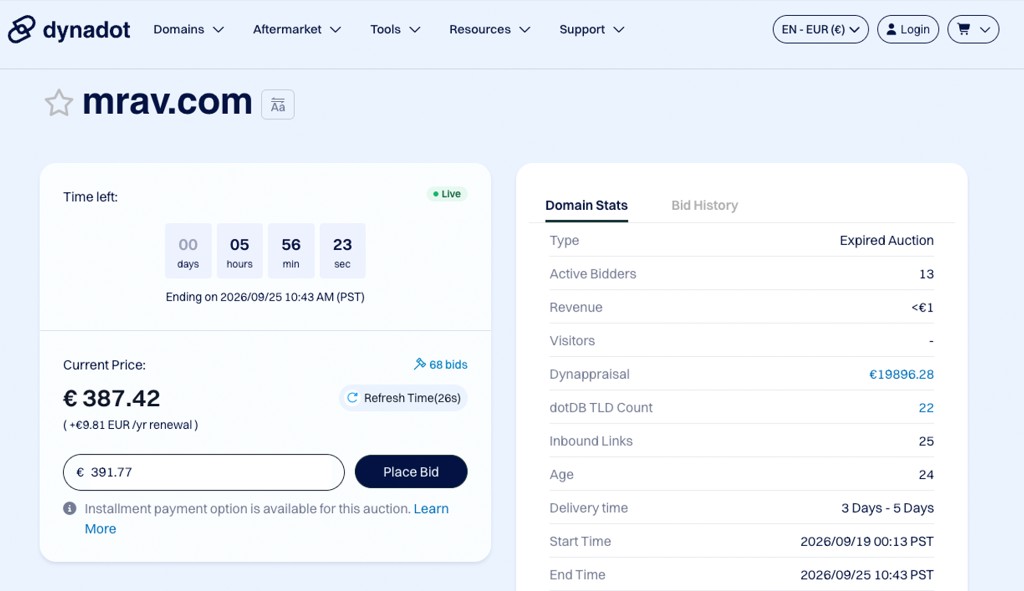
An expired auction is the most common type. The registrar lists a domain that has already expired, but has not been released yet. You are bidding on a name still inside the registrar’s expiry process, not on a free drop.
Even after you win, delivery often waits until the registrar finishes that path and pushes the name to you around the scheduled handoff. For where that sits on the clock, see the domain expiration lifecycle.
Reclaim risk: winning is not owning yet
Many expired auctions open while the original registrant can still renew or restore the name. In other words, the registrar is already auctioning someone else’s domain while that person can still take it back.
For some buyers that feels like the shady side of the domain world, but it is what it is.
That reclaim is often expensive. Once the name has left the cheap grace window, the original owner usually has to pay a redemption fee on top of renewal (often on the order of about $80 to $120, depending on registrar and TLD) to get it back.
So do not treat the hammer as a celebration. Treat it as “highest bid so far.”
Side note
Some owners let a name go to auction on purpose, just to see what people will bid. If the price looks good enough, they renew or redeem and take it back. On NameSilo this used to be an issue.
Dropcatch auctions
A dropcatch auction is not a promise that the domain is already yours. Platforms such as Nicsell auction the attempt to catch a name when it drops. If you win, the service still has to race other catchers at the registry.
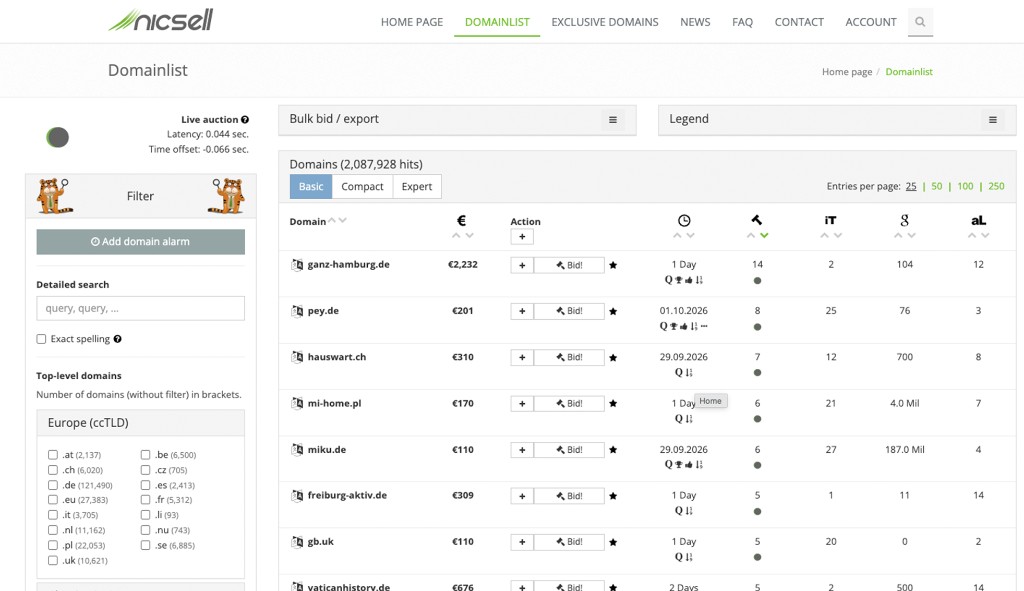
Higher bids usually buy more resources: more registrar connections, more parallel attempts, or priority inside that service’s pool. More budget improves odds. It does not delete competition. You can win the auction and still lose the drop.
That is why dropcatch auctions feel like bidding on probability. Most services charge nothing if the catch misses, but check the platform’s terms for fees before you bid.
Not every dropcatch auction works this way. With backorder services such as DropCatch.com, several people backorder the same name, the service catches it first, and only then auctions it among them. In that case the winner does get the name. More on backorders in the drop catching guide.
If you lose and there is still time
Some dropcatch auctions close well before the name actually drops. A service might run auctions every Monday, for example, while the domain only drops on Saturday. If you lose that auction and the drop is still days away, you can still place a backorder or bid with another dropcatcher.
User auctions
A user auction is different from an expired auction. The current registrant still owns the name and chooses to sell it through the registrar’s auction platform. There is no expiry countdown forcing the sale, and no public drop at the end of a missed renewal.
You are buying from a person, not from the expiry process. Seller terms, payment, and transfer matter more than grace periods or catch races. Dynadot is a common example of a registrar that runs user auctions alongside expired inventory.
Delivery works differently too. The seller transfers the name after you pay, so there is no expiry handoff to wait for.
Auctions vs closeouts
When an expired auction ends without any bids, many registrars move the name into a closeout: a buy-now stage where the price drops each day. There is no bidding, the first person to pay gets it, and the name has still not been released to the public.
More on that stage in domain closeouts.
Other uses of the word auction
People also say “auction” for formats that are not the daily expired, dropcatch, or user listing above. A few common ones:
Premium auction events: scheduled sales of curated or high-end inventory (for example a Dynadot premium auction event), separate from the everyday expired feed
Liquidation events: bulk clearance auctions such as GoDaddy’s liquidation auction events, where large batches of names are sold off in one go
Reverse auctions: the price starts high and steps down over time until someone buys. In practice that is how many closeouts work.
In some contexts, “auction” means the whole event: many domain auctions running at the same time.
Frequently asked questions
What are domain auctions?
Domain auctions are timed sales where bidders compete for a domain name. The three common types are expired auctions run by a registrar, dropcatch auctions run by a catch service, and user auctions where the current owner sells a name they still hold.
Can the original owner still reclaim a domain in auction?
Often yes, at least for part of the auction. Many expired auctions start while the name is still recoverable, and a renewal or redemption by the owner cancels the sale. Each registrar sets its own cutoff: at GoDaddy, for example, the owner can no longer renew after day 30 once someone has bid. Reclaim usually costs the owner a redemption fee on top of renewal.
Do all registrars handle reclaims during an auction the same way?
No. Each registrar decides how long the owner can still take the name back once an auction is running. GoDaddy, for example, stops renewals after day 30 if there is a bid. Check the registrar’s expiration policy before you count on a win.
What is a dropcatch auction?
A dropcatch auction sells the right to have a service try to register a domain at the drop. Winning does not guarantee the name. At services such as Nicsell, a higher bid usually means more effort goes into the catch, which raises the odds but still leaves catch risk.
How is an auction different from a closeout?
An auction is competitive bidding over a set window. A closeout is a buy-now price that drops each day, for names whose expired auction ended without bids. See domain closeouts for that stage.