
, Founder of UpSnatch ·
What are domain closeouts?
Table of contents
Where closeouts sit in the lifecycle
How closeout pricing usually works
A domain closeout is an expired domain that nobody bought in the auction, now for sale at a fixed price. The registrar still holds the name. There is no bidding: the first person to pay gets it, and the price usually drops every day.
Think of a closeout as a last chance to buy a name nobody bid on, before it drops. Closeouts usually come right after the auction, which is explained in domain auctions.
Definition
Domain closeout: an unsold expired domain offered at a fixed price that drops each day, first come, first served.
What a domain closeout is
When an expired auction ends without a buyer, many registrars don’t let the name go right away. They put it up for sale at a fixed price instead. Whoever pays first gets it.
Dynadot is a good example. Names that got no bids in its expired auction move to closeouts for three days. Dynadot describes it like this: “These are domains that were not purchased during auctions and are now available for immediate registration. Prices decrease each day until the closeout period ends.”
Not every registrar does this. Some skip closeouts and let unsold names continue toward redemption and deletion.
Can the previous owner still take it back? At many registrars, yes: GoDaddy, for example, lets the owner renew during the closeout until someone buys the name. Once you have paid, that door closes.
The Dynadot link on this page is an affiliate link. If you buy through it, UpSnatch may earn a commission at no extra cost to you.
Where closeouts sit in the lifecycle
On a common .com registrar path, the order looks like this:
The name expires and enters grace.
It may run in an expired auction.
If unsold, it enters closeout for several days.
If still unsold, it continues toward redemption, pending delete, and drop.
Exact day counts differ. The lifecycle timeline uses GoDaddy as an example, where the closeout runs from about day 37 to 42 after expiration. Dynadot and other registrars use their own windows.
How closeout pricing usually works
The price starts higher and drops every day until someone buys the name or the closeout ends. At Dynadot it looks like this, plus the normal renewal fee:
Day 1: $30
Day 2: $15
Day 3: $5
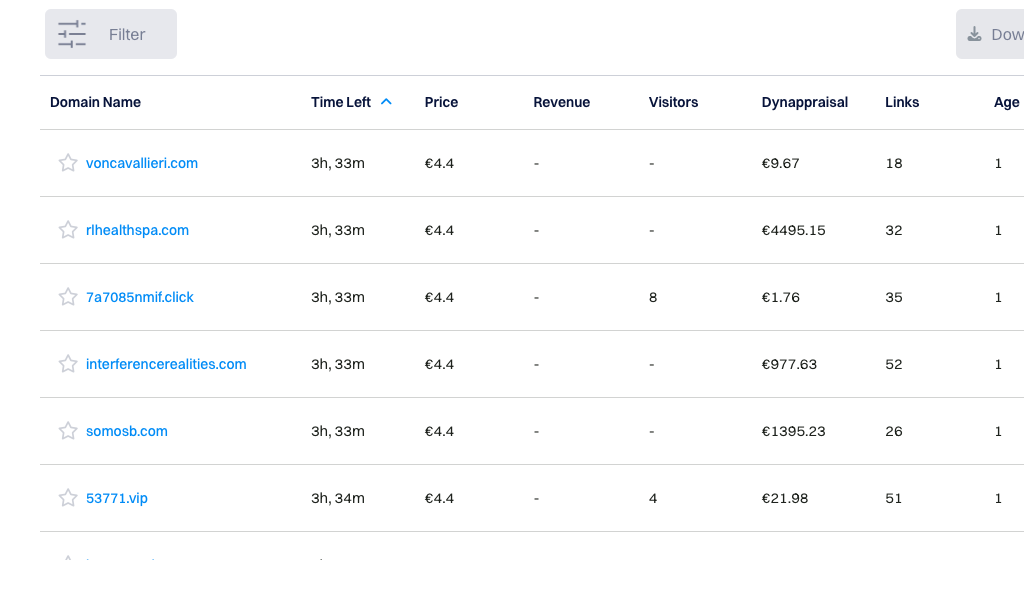
So you have to choose. Buy early and you pay more, but you are more likely to get the name. Wait and it gets cheaper, but someone else may buy it first, or the closeout ends and the name moves on.
Closeouts vs auctions vs drops
| Auction | Closeout | Drop / dropcatch | |
|---|---|---|---|
| How you buy | Highest bid in a window | Pay today’s buy-now price | Race to register at release, or bid on a catch attempt |
| Who holds the name | Registrar (expiry cycle) | Registrar (expiry cycle) | Nobody yet; registry release |
| Main uncertainty | Someone outbids you, or the owner reclaims | Someone else buys it first | Another catcher gets it first |
Buying a closeout feels more like a normal purchase than a dropcatch auction. There is no race at the drop. You just decide whether today’s price is worth it.
Who closeouts are for
Closeouts are handy if you missed the auction, prefer a fixed price over bidding, and don’t mind checking back each day. They are less useful if the name you want is at a registrar that doesn’t do closeouts.
Keep your expectations realistic. A name only ends up in closeout because nobody bid on it in the auction, so most of what you find there are leftovers. Now and then a decent name slips through, but the best names rarely get this far. If you want those, keep an eye on the expired auctions instead, so you see them before they ever reach closeout.
A low price doesn’t mean a good domain. Check the history and backlinks just like you would before bidding in an auction. For how to find good candidates, see how to find expired domains for SEO.
After you buy
The name can show up in your account before public WHOIS or RDAP lists you as the owner. That update sometimes takes a while, so don’t worry if the lookup still shows the old details right after your purchase.
Frequently asked questions
What are domain closeouts?
Domain closeouts are expired names that nobody bid on in the auction, now offered at a fixed price that drops each day. The registrar still holds the name, and the first person to pay gets it.
How is a closeout different from an auction?
In an auction you bid against other people over a set window. In a closeout there is no bidding: you pay the price of the day, and whoever pays first gets the name.
When do closeouts happen in the expiration lifecycle?
Right after the expired auction, for names that got no bids. At Dynadot the closeout lasts three days, at GoDaddy about five. After that, unsold names move on toward redemption, pending delete, and the drop.
Are closeouts safer than dropcatch auctions?
They carry a different risk. In a closeout you buy from the registrar that still holds the name, so there is no race at the drop. The previous owner can sometimes still renew until someone buys it, and you still need to check history and backlinks.
What happens if nobody buys a closeout?
The name continues toward redemption, pending delete, and the drop. After that, anyone can try to catch or register it.